Why Final Fantasy Fans Are Always Hunting for Something New
The Final Fantasy franchise has defined the Japanese role-playing game genre for nearly four decades. Its signature blend of cinematic storytelling, turn-based and real-time combat systems, sweeping orchestral scores, and character-driven narratives has created a player base with specific, deeply rooted expectations. When you finish a Final Fantasy title — whether it is the pixel-era charm of the original, the operatic tragedy of Final Fantasy VI, the boundary-pushing production of Final Fantasy VII Remake, or the MMO enormity of Final Fantasy XIV — the hunger does not simply end. You look for games that capture the same essence: strategic combat, rich world-building, emotional stakes, and a sense of scale that makes the journey feel consequential.
The challenge is that major Final Fantasy releases arrive years apart. Final Fantasy XVI launched in 2023, and subsequent entries remain in development. For fans who want something to play in between — without spending additional money — Steam's free-to-play library offers several titles that scratch the same creative itch. The following five games share meaningful DNA with the Final Fantasy tradition: turn-based or action-RPG combat, anime-influenced art direction, progression systems that reward investment, and narratives that take themselves seriously enough to earn emotional engagement.

1. Phantasy Star Online 2: New Genesis
Genre: Open-world action MMORPG
Developer: Sega
Why Final Fantasy fans will connect: Sci-fi fantasy world-building, class-based progression, and the social MMO experience that Final Fantasy XIV pioneered.
Phantasy Star Online 2: New Genesis is the most direct parallel to Final Fantasy XIV available without a subscription. Released in 2020 as a full reimagining of the PSO2 framework, New Genesis transports players to the planet Halpha — an open world that rewards exploration with combat encounters, resource gathering, and cooperative world events that feel structurally similar to FATE encounters in Eorzea.
The combat system prioritizes real-time action over turn-based mechanics, which places it closer to Final Fantasy XVI's action-oriented design than to classic entries. Players choose from multiple classes — Hunter, Ranger, Force, and others — each with distinct weapon-based skill trees. The Photon Arts system allows chained special attacks that mirror the Limit Break mechanic in its visual spectacle and tactical timing.
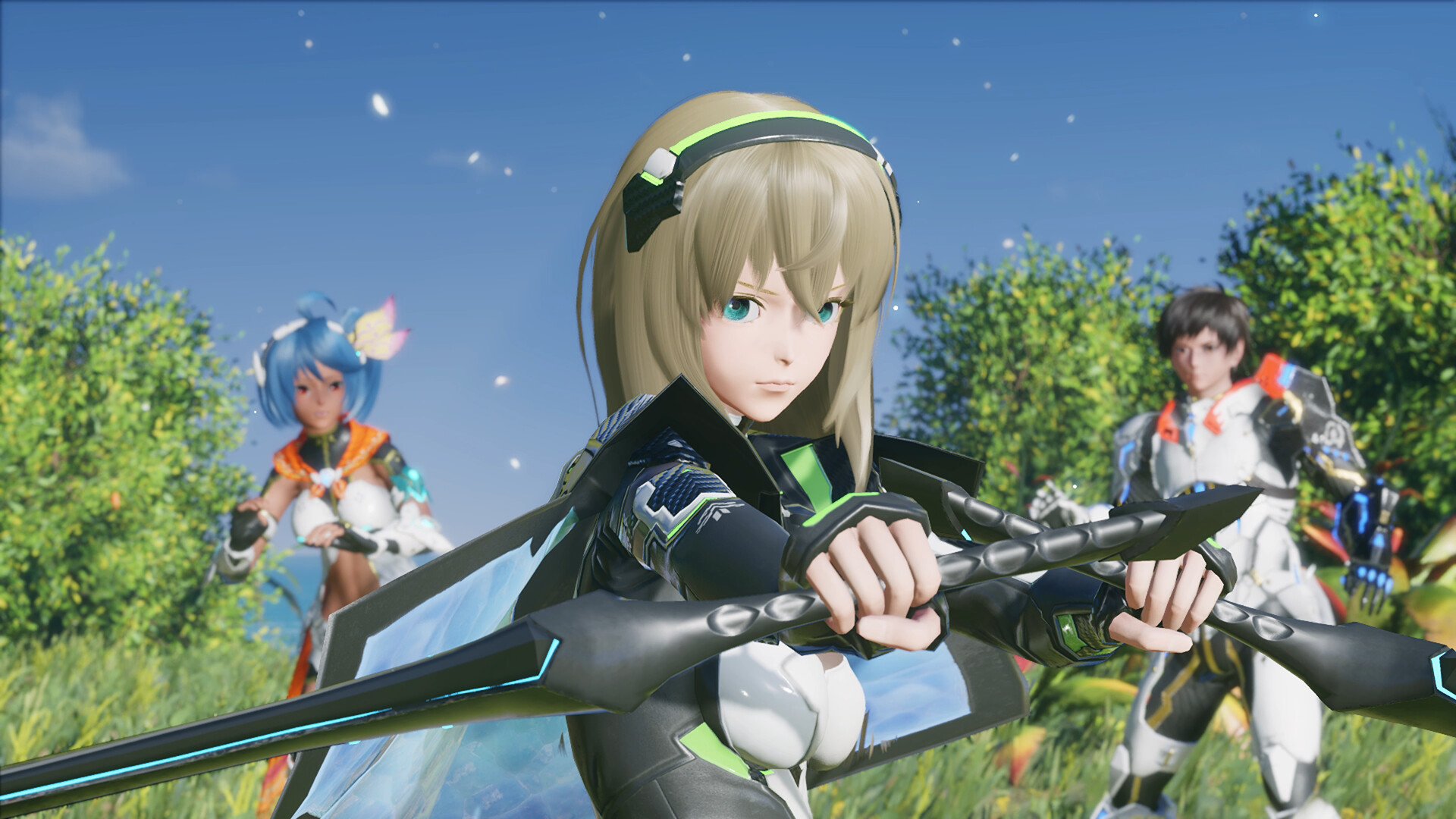
What makes New Genesis particularly compelling for Final Fantasy fans is its sense of scale. The world is vast, traversable on foot or via fast-travel, and populated with regional stories that unfold alongside the main narrative. The character creator is among the most detailed in any MMO, supporting an extraordinary degree of visual customization that appeals to players accustomed to Final Fantasy's meticulously designed protagonists.
Monetization note: The game is genuinely free to play. Premium currency (Star Gems) can be earned through gameplay or purchased, and is primarily used for cosmetics and convenience items. No content is locked behind a paywall.
2. Wuthering Waves
Genre: Open-world action RPG (gacha)
Developer: Kuro Games
Why Final Fantasy fans will connect: Post-apocalyptic fantasy setting, real-time combat with elemental mechanics, and a character-driven narrative.
Launched in 2024, Wuthering Waves quickly established itself as a serious contender in the open-world action RPG space. Set in a post-apocalyptic world where humanity is recovering from a cataclysmic event called the Lament, the game follows a protagonist who awakens with amnesia and gradually uncovers the truth about the world's collapse.
The combat system is where Wuthering Waves resonates most strongly with Final Fantasy sensibilities. Each character wields a unique weapon and elemental affinity, and the game encourages rapid character swapping mid-combat to trigger resonance effects — a mechanic that echoes Final Fantasy's elemental weakness systems and chain attacks. The dodge-and-counter timing window rewards skillful play, creating combat encounters that feel more deliberate than typical gacha RPGs.

The open world is richly detailed, with environmental puzzles, hidden bosses, and lore scattered across the landscape. The art direction leans heavily into anime aesthetics, which will feel familiar to fans of Final Fantasy's more recent entries. With hundreds of hours of content available at no cost, Wuthering Waves offers the most substantial free experience on this list.
Monetization note: As a gacha game, new characters are obtained through a randomized summoning system. However, the game is generous with free currency, and the main story and world content are fully accessible without spending.
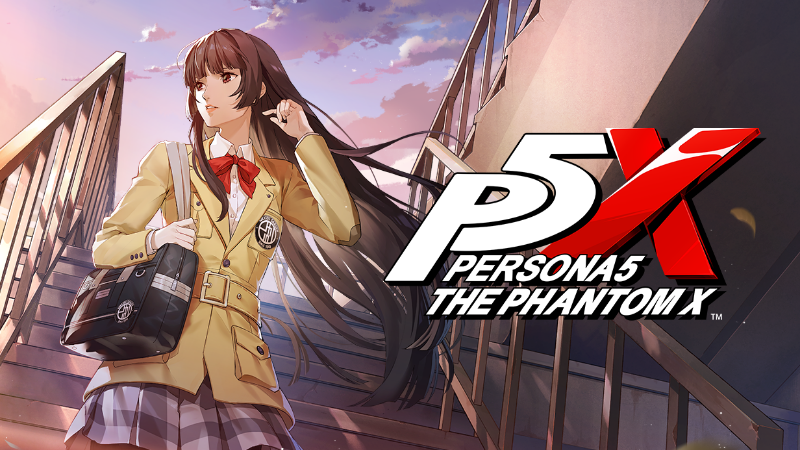
3. Persona 5: The Phantom X
Genre: Turn-based RPG
Developer: Atlus / Perfect World
Why Final Fantasy fans will connect: Classic turn-based combat, dungeon-crawling progression, and a narrative about youthful rebellion against societal corruption.
For Final Fantasy fans who cherish the series' turn-based heritage, Persona 5: The Phantom X is the most mechanically familiar title on this list. As a spin-off of the critically acclaimed Persona 5 (2016), this 2025 release transports the series' signature blend of daily life simulation and supernatural dungeon-crawling to a new protagonist codenamed "Wonder."
The combat system is explicitly turn-based, with elemental weaknesses, all-out attacks, and party management that will feel immediately natural to anyone who has played Final Fantasy X or earlier entries. The Persona system — in which characters summon manifestations of their psyche — functionally parallels Final Fantasy's summon and Eidolon mechanics, providing the same satisfaction of calling forth a powerful entity to turn the tide of battle.
What sets The Phantom X apart is its dual-structure gameplay. During the day, players attend school, build social links (Confidants), and develop their character's abilities. At night, they venture into the Metaverse — a cognitive world shaped by human desires — to battle enemies and progress the story. This rhythm of preparation and action mirrors the pacing that Final Fantasy games have long employed, where periods of narrative development and character growth alternate with intense combat sequences.
Monetization note: The game is free to download and play. As a mobile-origin title ported to Steam, it includes optional in-app purchases for character unlocks and cosmetic items.
4. Blue Protocol: Star Resonance
Genre: Action MMORPG
Developer: Bandai Namco
Why Final Fantasy fans will connect: Anime-art-style fantasy world, class-based combat, and large-scale cooperative raids.
Blue Protocol: Star Resonance, released in 2025 as an expansion of the Blue Protocol universe, is an action MMORPG that feels visually and mechanically like an anime-inflected cousin to Final Fantasy XIV. Players create their own hero, choose from multiple classes, and venture into a vast open world filled with dungeons, raids, and social activities.
The combat is real-time and action-oriented, with each class offering a distinct playstyle. The Blade Warden functions as a tank, the Twin Striker delivers melee damage, and spell-casting classes provide ranged support — a class trinity that Final Fantasy XIV players will immediately recognize. The game's raid system supports large-group encounters with mechanics that require coordination, positioning, and timing, echoing the primal and raid encounters that define Final Fantasy XIV's endgame.
The expansion introduced the Twin Striker class, a musician system that allows players to compose and perform music in-game, three new maps, six new dungeons, and additional story content exploring the backgrounds of key NPCs. Regular content updates ensure the world continues to expand.
Monetization note: Free to play with cosmetic microtransactions. All gameplay content, including raids and dungeons, is accessible without payment.
5. The Seven Deadly Sins: Origin
Genre: Open-world anime RPG
Developer: Netmarble
Why Final Fantasy fans will connect: Faithful anime adaptation with original story, team-based combat, and a fantasy world on the brink of collapse.
The most recent title on this list, released in 2026, The Seven Deadly Sins: Origin casts players as Prince Tristan of Liones in an open-world adaptation of the popular anime series. The game's premise — a world thrown into chaos by the collision of time and space — provides the kind of high-stakes narrative that Final Fantasy fans expect from their RPGs.
The combat system blends real-time action with team-based strategy. Players assemble a party of recognizable characters from the anime, each with unique abilities, and switch between them during combat to chain attacks and trigger special moves. The progression system includes both character leveling and equipment crafting, providing the kind of multi-layered advancement that rewards long-term investment.
The open world of Britannia is fully explorable, with side quests, hidden treasures, and world bosses that encourage exploration beyond the main story path. The art direction stays faithful to the anime's visual style while adding the environmental detail and lighting effects that modern RPG players expect.
Monetization note: Free to download and play, with optional purchases for character acquisition and progression boosts.
How These Games Compare to Final Fantasy
No free game will replicate the full Final Fantasy experience — the production values, the decades of lore, and the specific creative vision of Square Enix's development teams are unique to the franchise. But each of these five titles captures elements that Final Fantasy fans value:
- Turn-based combat is best served by Persona 5: The Phantom X
- MMO-scale world and social play is best served by Phantasy Star Online 2: New Genesis and Blue Protocol: Star Resonance
- Open-world action RPG exploration is best served by Wuthering Waves
- Anime-inspired narrative and team combat is best served by The Seven Deadly Sins: Origin
For fans awaiting the next major Final Fantasy release, these games offer substantial, free experiences that can fill the gap — not as replacements, but as complementary adventures that share the genre's core values of progression, narrative ambition, and combat depth.